Best Smartwatches Compared: Fitness, Battery, and Features
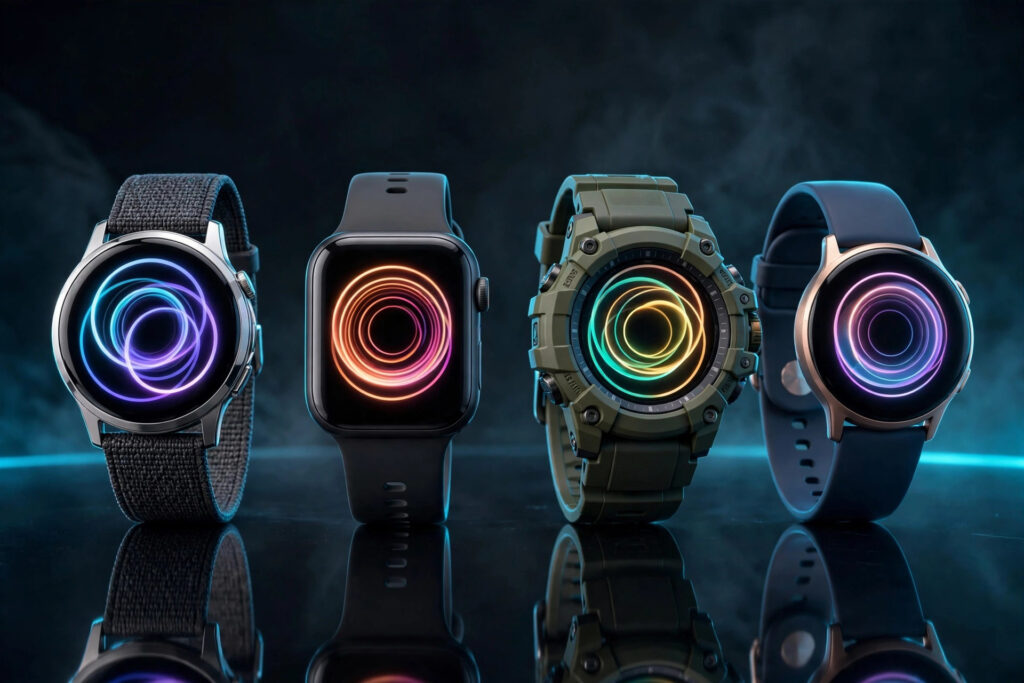
Choosing the best smartwatches in 2026 is really about matching the watch to your wrist, your phone, and your workouts — because the “best” fitness tracker for a marathoner and the best smartwatch for an iPhone user are completely different devices. The market has split into clear camps: full smartwatches with rich apps and bright displays, fitness-first watches with week-long batteries, and budget trackers that nail the basics. This guide compares the leading options across fitness accuracy, battery life, health features, and everyday smarts, so you can find the one you’ll actually wear every day — the only fitness metric that really matters.
What Defines the Best Smartwatches for Fitness
Fitness credibility comes down to sensor accuracy, not feature lists. Heart-rate accuracy during steady-state cardio is good across major brands now, but differences appear in tricky conditions: wrist-based HR during high-intensity intervals, strength training, and cold weather still challenges optical sensors — serious athletes should consider watches that pair with chest straps. GPS accuracy matters for runners and cyclists: dual-frequency (multi-band) GPS, now common on mid-range and up, dramatically improves track accuracy in cities and forests versus older single-band chips. Look for the sport profiles you actually do, automatic workout detection, recovery and training-load metrics (Garmin, Apple, and Samsung all offer versions), and water resistance rated for swimming (5ATM minimum) if you swim. Sleep tracking quality varies: Apple, Samsung, and Google improved significantly, but Garmin and Fitbit still lead on sleep insights and recovery guidance. Finally, honest battery life during GPS workouts — manufacturers quote smartwatch-mode battery, but an “18-hour” watch may only manage 6–8 hours of continuous GPS tracking, which matters for long hikes and races.
Best Smartwatches: Apple, Samsung, and Google Flagships
For most buyers, the best smartwatch is the one matching their phone. The Apple Watch (Series and Ultra lines) remains the most polished smartwatch experience: best-in-class app ecosystem, excellent health sensors (ECG, blood oxygen, temperature), precise dual-frequency GPS on Ultra models, and deep iPhone integration — but iPhone-only, with 18–36 hours of battery (Ultra stretches to 2–3 days). Samsung’s Galaxy Watch series is the Android equivalent, with Wear OS, Samsung Health’s strong sleep and body-composition features, and the best integration for Galaxy phone owners — though some features stay exclusive to Samsung phones. Google’s Pixel Watch offers the cleanest Wear OS experience with Fitbit’s excellent health platform baked in, ideal for Pixel owners who want Fitbit insights without a separate tracker. All three now offer cellular models for phone-free runs, fall detection, and crash detection. If you’re platform-agnostic, compare health ecosystems (Apple Health vs Samsung Health vs Fitbit) as much as hardware — you’ll live in that app daily.
Best Smartwatches for Battery Life and Serious Athletes
If charging every night sounds miserable, Garmin owns this category. The Forerunner series (runner-focused) and Fenix line (multisport premium) deliver 1–3 weeks of smartwatch battery and 20–90 hours of GPS tracking, with the deepest training metrics in the business: training readiness, race predictors, topographic maps, and multi-sport profiles. The trade-off is smarts — Garmin’s app ecosystem and voice features lag Apple and Samsung, and the interface feels utilitarian. Coros challenges Garmin with similarly epic battery life and simpler interfaces at lower prices, winning over ultrarunners and climbers. Amazfit has become the value disruptor: surprisingly accurate sensors, 1–2 week batteries, and AMOLED displays at a fraction of Garmin’s prices — excellent for casual athletes who want Garmin-like endurance without the cost. Polar remains strong for heart-rate science devotees. Choose this camp if workouts outrank apps in your priorities; a watch that’s dead on day two of a hiking trip is a paperweight regardless of its app store.
Budget Picks and Health-Focused Features
Under $150, expectations reset but value abounds. Amazfit’s budget models, Xiaomi’s Watch series, and Fitbit’s Charge/Inspire trackers cover heart rate, sleep, SpO2, and dozens of sport modes with week-plus batteries — everything a casual fitness user needs. The compromises: less accurate GPS (often connected-GPS relying on your phone), fewer advanced metrics, and basic smart features. For health monitoring specifically, check sensor certifications rather than marketing: ECG and blood-oxygen features are regulated differently by region, and irregular-rhythm notifications require specific approvals. Fall detection and emergency SOS are now widespread and genuinely life-saving features worth prioritizing for older relatives. LTE on budget watches is rare — expect to carry your phone. And a practical note: try the band system before committing, since third-party band availability varies enormously and an uncomfortable watch ends up in a drawer. The best budget smartwatch is the comfortable one with the sensors you’ll actually check.
FAQs
Q: Do I need a smartwatch that matches my phone brand?
A: Mostly yes for full features. Apple Watch requires iPhone; Galaxy Watch works best with Samsung phones; Pixel Watch pairs best with Pixel. Garmin, Coros, and Amazfit are platform-agnostic.
Q: Are smartwatch heart-rate readings accurate?
A: Good for steady cardio, less reliable for intervals and strength training. Serious athletes should pair a chest strap for training-critical accuracy.
Q: How often will I need to charge?
A: Apple/Samsung/Google flagships: daily (Ultra models: 2–3 days). Garmin/Coros/Amazfit: 1–3 weeks. Budget trackers: 7–14 days.
Q: Can a smartwatch replace a dedicated GPS watch for marathons?
A: Apple Watch Ultra and recent Galaxy/Pixel watches handle marathons fine, but Garmin remains the safest pick for ultras and multi-day adventures thanks to battery life and mapping.

admin
Tech writer at HubTech Fusion covering the latest in technology, from AI to cybersecurity and beyond.
Related Articles

MacBook vs Windows Laptop: Which Should You Buy?
The MacBook vs Windows laptop debate has shifted dramatically in recent years. Apple’s silicon chips rewrote the rules on laptop battery life…
Best Budget Smartphones Worth Buying Right Now
The best budget smartphones of 2026 have quietly become the smartest buys in mobile: mid-range chips now handle everything flagships do for…
Best Wireless Earbuds Compared: Sound, Battery, and Value
Finding the best wireless earbuds in 2026 means navigating a market that’s simultaneously mature and confusing: flagship buds now rival wired headphones…