AI Voice Cloning: How It Works and How to Spot It
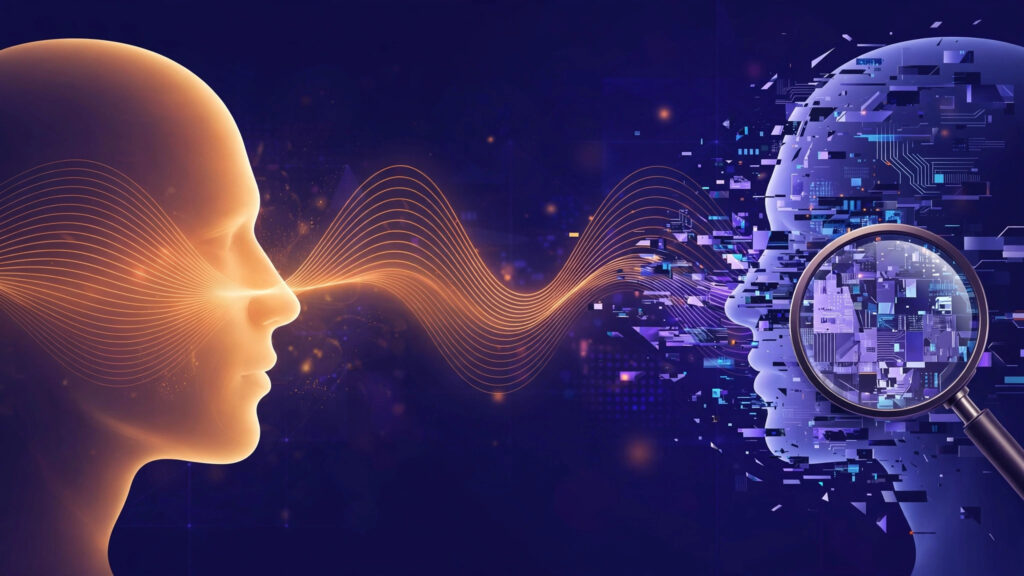
Three seconds of audio. That is all modern AI voice cloning needs to reproduce someone’s voice saying anything — with their cadence, their accent, their laugh. The technology powers remarkable accessibility tools and creative workflows, but it has also become a scammer’s favorite weapon. Here is how it works, how to use it responsibly, and how to protect yourself.
The speed of progress is the story: what required hours of studio recordings five years ago now needs a voicemail-length clip and runs on consumer hardware.
How AI Voice Cloning Works
Modern voice cloning has two stages. Speaker encoding: a neural network analyzes the short audio sample and extracts a “speaker embedding” — a mathematical fingerprint capturing timbre, pitch patterns, accent, and speaking style. Synthesis: a text-to-speech model (typically a diffusion or transformer-based vocoder) generates new audio from your text, conditioned on that embedding — producing speech that sounds like the target speaker saying words they never said.
Two flavors exist: zero-shot cloning (no training on the target — just the short sample at inference time; what consumer tools offer) and fine-tuned cloning (training a dedicated model on minutes-to-hours of someone’s voice for maximum fidelity — used for professional voice doubles and preserving voices of people losing their speech to illness).
Legitimate Uses: Accessibility and Creativity
The positive applications are genuinely moving. Voice preservation: people diagnosed with ALS or throat cancer bank their voices and continue speaking as themselves through assistive devices. Localization: creators dub content into dozens of languages while keeping their own vocal identity. Entertainment: filmmakers resurrect archival voices with estate permission; podcasters fix flubbed lines without re-recording.
Consent is the bright line. Every legitimate use involves the voice owner’s informed permission — ideally documented. The technology itself is neutral; the ethics live entirely in authorization.
The Scam Threat: “Mom, It’s Me, I’m in Trouble”
The dark side is already here. Family emergency scams: criminals clone a child’s voice from social media videos and call parents claiming kidnapping or arrest, demanding wire transfers. The FBI has warned about these explicitly. CEO fraud: cloned executive voices authorize fraudulent transfers in “urgent” calls to finance staff. Political deepfakes: fake robocalls in candidates’ voices have already appeared in elections.
What makes voice scams uniquely dangerous: we are wired to trust familiar voices, the calls create panic (which suppresses skepticism), and verification feels rude in the moment (“is this really you, Mom?”). Attackers exploit all three.
AI Voice Cloning Scams: How to Spot and Stop Them
- Establish a family safe word: a secret phrase that verifies identity on any emergency call. This single habit defeats most voice-clone scams.
- Call back on a known number: hang up and call the person directly — scammers cannot intercept your outbound call.
- Listen for artifacts: unnatural breathing, flat emotional affect, odd pauses, and glitchy transitions can betray synthesis — though the best clones hide these well.
- Ask unguessable questions: something only the real person would know, asked casually. Real-time cloning cannot fabricate shared memories.
- Limit public voice exposure: consider what voice content you post publicly; every podcast clip and video is potential training data.
- Slow down transfers: any “urgent” wire request by voice deserves verification through a second channel. No legitimate emergency forbids a callback.
Businesses need institutional defenses against AI voice cloning too, because consumer vigilance does not scale to finance departments. The essentials: out-of-band verification policies for any payment or credential change requested by voice — a second approver contacted through a known channel, no exceptions, no matter how senior the “caller” sounds. Code words for wire authorizations that rotate periodically. Training that uses real examples: play employees actual cloned-voice scam recordings (many are published by security researchers) so the threat feels concrete rather than theoretical. And technical controls where available — some phone systems now flag suspected synthetic audio, though detection remains imperfect. The organizations that get hurt are not the ones unaware of the threat; they are the ones whose verification procedures existed on paper but bent under manufactured urgency. Make the procedure unbendable.
FAQs
Q: How much audio is needed to clone a voice?
A: Modern zero-shot systems need as little as 3–10 seconds for a recognizable clone; a minute or more yields much higher fidelity.
Q: Is AI voice cloning legal?
A: Cloning with consent is legal in most places. Non-consensual cloning for fraud is illegal everywhere; several jurisdictions have added specific deepfake and voice-rights statutes. Unauthorized commercial use can violate right-of-publicity laws.
Q: Can you detect a cloned voice reliably?
A: Forensic tools exist but it is an arms race — detection lags generation. Behavioral verification (callbacks, safe words, secret questions) is far more reliable than trying to hear the difference.
Q: What should I do if someone clones my voice?
A: Document everything, report to law enforcement and the platform used, warn your contacts proactively, and consult an attorney about right-of-publicity claims.

admin
Tech writer at HubTech Fusion covering the latest in technology, from AI to cybersecurity and beyond.
Related Articles
What Is MLOps? A Beginner’s Guide to Machine Learning Operations
Training a model on your laptop is a data science project. Running that model reliably for millions of users, retraining it as…

Best AI Workflow Automation Tools Compared
Workflow automation grew up: it is no longer just “when X happens, do Y.” The best AI workflow automation tools now embed…

Can AI Search Engines Replace Google? An Honest Look
For the first time in 25 years, Google’s dominance feels contestable. Perplexity, ChatGPT Search, Copilot, and a wave of startups promise a…